Sound masking is one of the most effective, yet widely misunderstood, solutions for managing workplace noise, improving speech privacy, and creating more comfortable environments. In modern offices, healthcare facilities, financial institutions, schools, and public spaces, unwanted noise doesn’t just irritate — it directly impacts focus, confidentiality, productivity, and overall well-being.
We’ve helped many clients with our sound masking services, ensuring unwanted noise levels are promptly brought within health and safety limits. This guide explains exactly what sound masking is, how it works, where it’s used, and why it has become a critical acoustic solution for today’s built environments.
What Is Sound Masking?
Sound masking is a technology that introduces carefully engineered ambient background noise into a space to reduce the intelligibility of speech and other distracting sounds. Rather than blocking or canceling sound, sound masking makes unwanted conversations less noticeable and more challenging to understand.
The goal is not silence — in fact, complete silence makes surrounding conversations easier to overhear. Sound masking raises the overall background sound level just enough so speech blends into the environment, protecting privacy and minimizing distraction.
Sound masking is commonly mistaken for:
- White noise machines
- Noise-canceling systems
- Soundproofing or acoustic insulation
While related, sound masking is different from each of these approaches. It does not cancel noise or physically block sound waves. Instead, it changes how people perceive sound within a space.
How Sound Masking Works
Sound masking is based on a principle of human hearing known as auditory masking, in which one sound makes it more challenging to perceive another.
Humans are susceptible to speech. Even at low volumes, conversations pull our attention because our brains naturally try to interpret words. A properly tuned sound masking system targets this sensitivity by adding a subtle background sound that interferes with the clarity of speech without becoming noticeable itself.
Step-by-Step Operation
- Ambient Sound Is Generated
A sound masking system produces a consistent, non-distracting background sound specifically shaped to match the frequencies of human speech rather than generic white noise. - Sound Is Evenly Distributed
Speakers are installed either above ceiling tiles (called plenum systems) or directly within the room (direct-field systems) to create uniform coverage across the space. - The Noise Floor Is Raised
By raising the baseline background sound — known as the “noise floor” — conversations fade into the environment instead of standing out. - Speech Becomes Unintelligible Over Distance
People may still hear that someone is talking nearby, but they can no longer understand what is being said, especially beyond a few feet of the source. - Distraction and Eavesdropping Are Reduced
As speech merges with background noise, cognitive distraction decreases and confidential conversations are protected.
Why Sound Masking Works So Well
The effectiveness of sound masking is rooted in how the brain processes sound.
In quiet environments, even distant speech is easy to detect. This leads to:
- Difficulty concentrating
- Increased mental fatigue
- Loss of productivity
- Breaches of privacy or confidentiality
Sound masking modifies this process:
- It lowers speech intelligibility, preventing words from being clearly recognized.
- It stabilizes the acoustic environment, removing sudden changes in noise levels that pull attention.
- It reduces perceived loudness of conversations, improving comfort without increasing actual noise.
Rather than attempting to eliminate noise — which is extremely difficult and expensive — sound masking smartly works with human perception to deliver more practical results.
There’s a lot of research supporting the benefits of sound masking. Before implementing sound masking, noises disturbed phone conversations the most. Once added, all types of work were less distracted by noise per this study.
This research examines the effects of the location of sound-masking loudspeakers on cognitive performance in open-plan offices.
With the rise of social robots, this study found low-pitch speech-shaped noise improves a social robot’s talk in noisy environments
Key Components of a Sound Masking System
A professional sound masking setup includes several essential components:
1. Sound Masking Generators
These devices produce the engineered ambient noise. Unlike white noise generators, they are finely tuned to the frequencies where human speech occurs.
2. Amplifiers
Amplifiers power and regulate sound output across the system while maintaining consistent volume throughout each coverage zone.
3. Speakers or Emitters
Installed either above ceilings or within occupied spaces, speakers disperse the masking sound evenly.
4. Zoning Controls
Modern systems allow different areas to be tuned independently — important when various workspaces require different masking levels.
5. Calibration & Tuning Tools
After installation, technicians measure acoustic conditions and adjust both sound volume and frequency curves to meet precise comfort and performance standards.
Tuning is critical. Improperly tuned sound masking can become noticeable or ineffective. Professional calibration ensures the system blends naturally into the room environment.
Where Sound Masking Is Used
Sound masking is widely applied across almost every commercial and institutional setting:
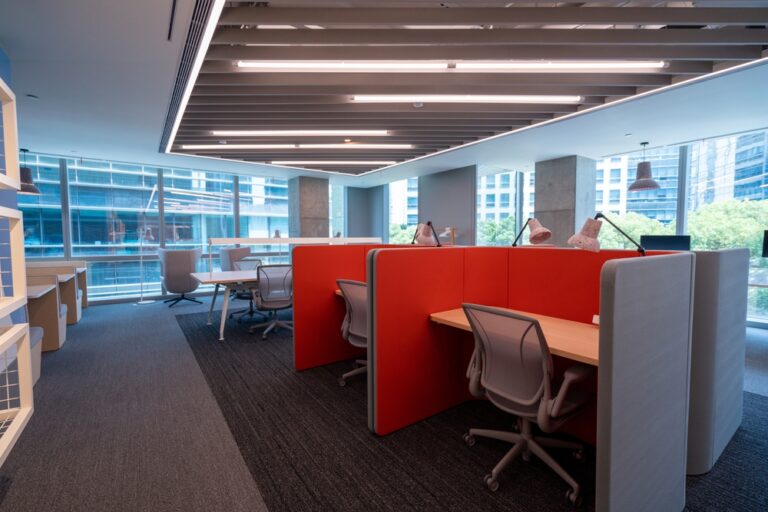
Open-Plan Offices
Open layouts maximize collaboration but create constant noise distractions. Sound masking reduces conversational interference, helping employees maintain focus.
Private Offices & Conference Rooms
In spaces where walls do not extend to the ceiling, sound travels easily between rooms. Sound masking restores privacy without expensive reconstruction.
Healthcare Facilities
Patient confidentiality is essential. Waiting rooms, exam spaces, and counseling areas benefit greatly from sound masking to meet privacy standards and improve patient comfort.
Financial & Legal Offices
Client discussions must remain confidential. Sound masking prevents overheard conversations and protects sensitive information.
Educational Facilities
Libraries, administrative offices, counseling areas, and study spaces use sound masking to maintain quiet environments without enforced silence.
Call Centers
With dozens or hundreds of simultaneous conversations, speech masking dramatically reduces ambient confusion and increases acoustic comfort.
Public Spaces
Reception areas, lobbies, and waiting rooms apply sound masking to prevent noise build-up and protect conversational privacy.
Benefits of Sound Masking
A professionally installed sound masking system delivers wide-ranging advantages:
Improved Speech Privacy
Conversations remain confidential without needing soundproof walls or heavy acoustic treatments.
Reduced Distractions
By lowering speech clarity, employees stay focused longer, resulting in measurable productivity improvements.
Better Acoustic Comfort
Rooms maintain consistent background noise — eliminating both dead silence and annoying chatter.
Cost-Effective Noise Control
Sound masking is often far more affordable than major soundproofing renovations or architectural upgrades.
Flexible Implementation
It adapts easily to changing floor plans and expanding workspaces without major construction.
Supports Compliance
Many industries require protection against speech disclosure; sound masking helps meet privacy expectations and regulatory standards.
What Sound Masking Is Not
There are important misconceptions to understand:
- Not soundproofing – It does not block sound or prevent noise transmission through walls or ceilings.
- Not noise cancellation – It does not use reverse-frequency cancellation like headphones.
- Not white noise machines – Targeted sound curves are far more effective and comfortable than basic static noise.
- Not a cure-all for loud environments – Extremely loud noises may still require acoustic absorption or sound isolation.
Sound masking works best as part of a broader acoustic strategy, often complemented by sound panels, ceiling treatments, and good space planning.
Sound Masking vs Other Acoustic Solutions
Sound Masking vs White Noise
White noise machines emit a broad static sound that is often distracting and uncomfortable. Purpose-built sound masking systems tailor sound output precisely to speech frequencies, achieving far greater effectiveness with minimal perceptibility.
Sound Masking vs Soundproofing
Soundproofing attempts to physically block noise with mass and insulation. This is effective but expensive and structurally complex. Sound masking achieves privacy perceptually rather than physically, making it affordable and flexible.
Sound Masking vs Acoustic Panels
Panels absorb sound and reduce echo but do not stop conversations from being intelligible across open spaces. Sound masking directly addresses speech privacy rather than reverberation alone.
Installation & Setup Process
A professional sound masking installation typically follows this workflow:
- Acoustic Assessment
- Measure baseline noise levels
- Identify speech privacy requirements
- System Design
- Determine speaker placement
- Zone coverage based on use of spaces
- Equipment Installation
- Install speakers and control hardware
- Calibration & Tuning
- Set volume and frequency curves
- Balance coverage across zones
- Verification Testing
- Confirm privacy levels and sound uniformity
Ongoing system adjustments are often made during normal occupancy to ensure optimal comfort.
Is Sound Masking Right for Your Space?
Sound masking is ideal if your environment experiences:
- Distracting background conversation
- Privacy concerns
- Open ceilings or partial-height walls
- Growing staff density
- Noise complaints from occupants
If extreme noise sources are present (machinery, outdoor road traffic, music venues), soundproofing solutions may be necessary in combination with masking.
For most office and professional environments, however, sound masking represents the greatest return-on-investment in acoustic improvement.
Final Thoughts
That does it, that answers what sound masking is and addresses all the most common questions we get about it.
Sound masking is a powerful and proven solution for improving workplace privacy, focus, and comfort without major construction. By working with the brain’s perception of sound rather than battling physics alone, sound masking achieves results that traditional methods struggle to match — at a fraction of the cost.
When properly designed and professionally calibrated, a sound masking system becomes virtually unnoticeable while delivering dramatic improvements in acoustic quality.
For organizations seeking real solutions to modern noise challenges, sound masking has become the gold standard in workplace acoustic management.
If you need help with sound masking your office, facility, or business, be sure to reach out. We’re available by calling 720-575-2494 or you can reach us online here.