
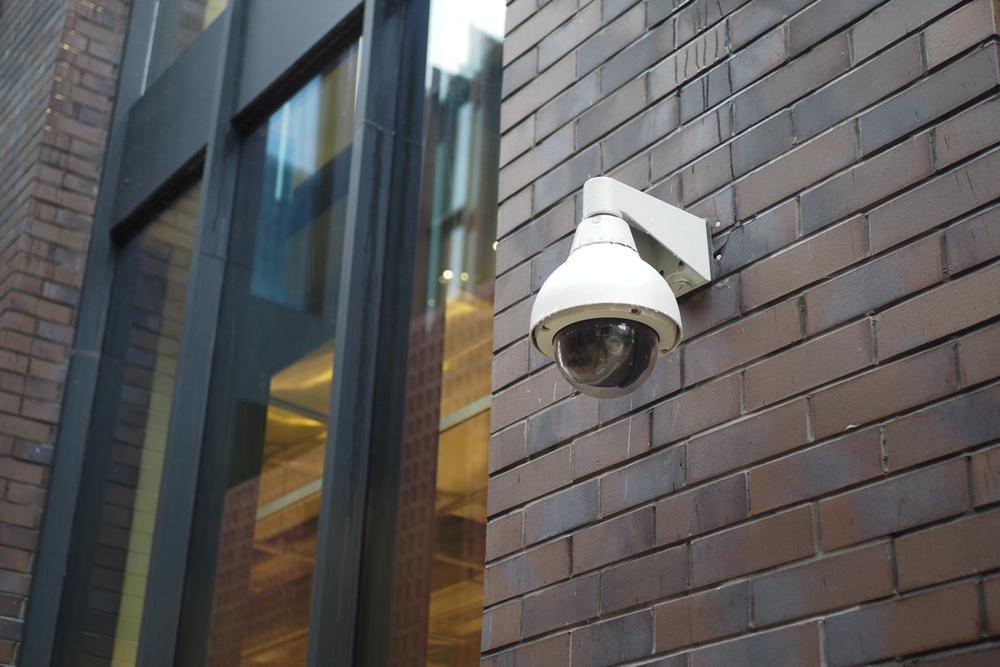
CCTV, short for closed-circuit television, is a video surveillance system that uses cameras to capture and transmit video to a specific set of monitors, recording devices, or authorized users. Unlike traditional broadcast television, where a signal is distributed publicly, CCTV keeps video within a controlled system or network.
For businesses, schools, warehouses, healthcare facilities, multifamily properties, government buildings, and other commercial environments, CCTV has become an important part of physical security. A properly designed system gives security teams and property managers better visibility into entrances, parking areas, hallways, loading docks, restricted spaces, and other locations where monitoring may be necessary.
Modern CCTV systems are also considerably more capable than the grainy surveillance cameras many people associate with the term. Today’s systems can provide high-resolution digital video, remote viewing, motion-based recording, event notifications, advanced search capabilities, and integration with access control and other building technologies.
Understanding what CCTV is and how it works is the first step toward determining what type of surveillance system makes sense for a particular facility.
What Does CCTV Mean?
CCTV stands for closed-circuit television. The “closed-circuit” portion of the name describes how video is distributed.
With broadcast television, a video signal is intended for a broad audience. In a CCTV system, footage is transmitted only to designated equipment and authorized viewers. Depending on the system, that might include a security monitor, network video recorder, security operations center, desktop computer, or mobile device.
A CCTV system typically consists of several interconnected components:
- Security cameras
- Cabling or network infrastructure
- Video recorders or storage systems
- Monitors or viewing stations
- Network switches and related hardware
- Video management software
- Remote viewing applications
- Power supplies or Power over Ethernet (PoE) equipment
Not every CCTV installation uses all of these components in the same way. The system architecture depends on whether the cameras are analog or IP-based, the number of cameras involved, recording requirements, building layout, security objectives, and existing network infrastructure.
How Does a CCTV System Work?
At its most basic level, a CCTV system captures images through one or more cameras, transmits that video to another device, and makes the footage available for live viewing, recording, or both.
What happens between the camera and the viewer depends on the technology being used.
Video Capture
Each CCTV camera contains an image sensor that converts light entering the lens into a video image. Camera specifications determine how much useful detail the system can capture.
Resolution matters, but it is only one factor. Lens selection, viewing angle, lighting, camera placement, frame rate, sensor performance, and compression can all influence the quality of recorded footage.
A camera positioned correctly at a doorway, for example, may provide far more useful evidence than a higher-resolution camera installed too far away or at an ineffective angle.
Video Transmission
Once captured, the video must travel from the camera to the recording or monitoring equipment.
Traditional analog CCTV systems generally transmit video over coaxial cable. Modern IP surveillance cameras transmit digital video across an Ethernet network.
Many IP cameras use Power over Ethernet, allowing electrical power and network data to travel over the same Ethernet cable. This can simplify installation because the camera may not require a separate electrical outlet at its mounting location.
Video Recording
Surveillance footage is commonly stored on a digital video recorder (DVR) or network video recorder (NVR).
A DVR is traditionally associated with analog cameras. The recorder receives the camera signal and processes it for digital storage.
An NVR is generally used with IP cameras. Because IP cameras generate digital network video, the NVR receives and stores those video streams across the network.
Recording systems can be configured in several ways. Some record continuously, while others record when motion or another predefined event is detected. Commercial environments may use different recording rules for different cameras.
Monitoring and Playback
Authorized users can view live feeds or recorded footage through monitors, computers, video management software, or compatible mobile devices.
This is one of the biggest differences between older CCTV installations and today’s networked video surveillance systems. Security personnel no longer necessarily need to sit directly in front of a dedicated bank of monitors to access camera footage.
Depending on system configuration and cybersecurity policies, authorized personnel may be able to securely view cameras remotely.
What Are the Main Types of CCTV Systems?
“CCTV” has become a broad term encompassing several surveillance technologies. Understanding the major system types makes it easier to compare equipment and determine which architecture fits a facility.
Analog CCTV Systems
Analog CCTV is the traditional form of video surveillance. Cameras transmit their video signals to a DVR, typically through coaxial cabling.
Analog systems remain in use, particularly in buildings with existing surveillance infrastructure. In some cases, upgrading components while retaining usable cabling can be practical.
However, new commercial installations increasingly use network-based surveillance because IP technology offers greater flexibility and scalability.
IP CCTV Systems
An IP camera system uses Internet Protocol networking to transmit digital video.
Each camera functions as a network device and can communicate through structured Ethernet cabling and network switches. Video can then be recorded on an NVR, server, or another compatible storage platform.
IP CCTV systems can offer several advantages, including:
- High-resolution video
- Easier system expansion
- Centralized camera management
- Power over Ethernet support
- Flexible recording configurations
- Remote access capabilities
- Integration with other security technologies
The networking component also makes professional system design particularly important. Bandwidth, storage, network segmentation, cybersecurity, PoE capacity, and switch architecture can affect system performance.
Wireless CCTV Systems
Wireless surveillance cameras transmit data using a wireless network rather than relying entirely on physical data cabling.
The word “wireless,” however, can be misleading. Many wireless cameras still require electrical power unless they are battery-operated. Commercial environments also need to consider wireless coverage, interference, bandwidth, security, and reliability.
For that reason, wired IP infrastructure is often preferred for permanent commercial surveillance installations where consistent connectivity is a priority.
Hybrid CCTV Systems
A hybrid system combines existing analog equipment with newer digital or IP technology.
This approach can be useful when an organization wants to modernize surveillance without immediately replacing every camera, cable, and recorder.
A well-planned migration strategy can allow facilities to upgrade surveillance infrastructure in phases while preserving investments that still provide value.
Common Types of CCTV Cameras
Camera selection should be based on what the system actually needs to see. Different camera designs are suited to different environments and security objectives.
Dome Cameras
Dome cameras are housed inside a rounded enclosure and are frequently used indoors, although weather-rated outdoor models are also available.
Their relatively discreet appearance makes them common in offices, schools, retail spaces, hospitality properties, and commercial facilities.
Bullet Cameras
Bullet cameras have a more elongated, visible design. They are frequently installed around building exteriors, parking areas, entrances, and property perimeters.
Their obvious presence can also reinforce the fact that an area is under video surveillance.
Turret Cameras
Turret cameras use a ball-and-socket style design that allows the camera to be aimed toward a particular area.
They have become common in modern IP surveillance installations because they offer flexible positioning and a relatively compact profile.
PTZ Cameras
Pan-tilt-zoom (PTZ) cameras can move horizontally, tilt vertically, and zoom toward selected areas.
PTZ cameras can be valuable for monitoring large spaces such as parking lots, campuses, industrial sites, and open commercial properties. Depending on the system, movement may be controlled by an operator or automated through presets and other functions.
PTZ cameras do not automatically replace fixed cameras. A fixed camera continuously watches its assigned field of view, while a PTZ camera can only point in one direction at a given moment. Effective surveillance designs sometimes use both.
Fisheye and Multi-Sensor Cameras
Fisheye cameras use specialized lenses to capture extremely wide fields of view, sometimes approaching 360-degree coverage.
Multi-sensor cameras use multiple imaging sensors within one housing to cover several directions simultaneously.
These technologies can be useful in large indoor spaces, intersections of hallways, warehouses, open offices, retail floors, and other areas where broad coverage is needed.
What Is CCTV Used For?
CCTV is commonly associated with crime prevention, but modern surveillance systems serve a much wider range of operational and security purposes.
Monitoring Entrances and Exits
Building entrances are among the most important locations for surveillance.
Cameras can help document who enters and leaves a facility, monitor visitor activity, and provide visual information when an incident needs to be investigated.
When CCTV is integrated with an access control system, security personnel may be able to correlate video with door activity and access events.
Protecting Parking Areas and Building Perimeters
Exterior surveillance can provide visibility around parking lots, garages, loading areas, gates, walkways, and building perimeters.
Outdoor camera selection requires particular attention to environmental conditions. Weather resistance, nighttime performance, mounting height, lighting, glare, distance, and field of view can substantially affect the usefulness of recorded footage.
Monitoring Restricted Areas
Server rooms, inventory areas, equipment rooms, storage facilities, laboratories, and other restricted spaces may benefit from video monitoring.
CCTV can provide additional context when paired with electronic access control. An access control log may indicate that a credential was used at a particular time; corresponding video can help show what actually occurred at the doorway.
Incident Investigation
One of the most valuable functions of recorded surveillance is the ability to review events after they occur.
Footage can help organizations investigate property damage, unauthorized access, theft, safety incidents, disputes, or unusual activity.
The value of the footage depends heavily on system design. A camera that technically covers an area is not necessarily capturing enough detail to answer the questions investigators will have later.
Operational Visibility
Businesses also use video systems for purposes beyond traditional security.
Depending on the environment, cameras may help authorized personnel monitor loading areas, vehicle movement, production spaces, customer traffic, building occupancy, or other operational activities.
CCTV vs. Video Surveillance: Is There a Difference?
The terms CCTV and video surveillance are often used interchangeably, and in everyday conversation that is usually reasonable.
Technically, CCTV originally referred to closed analog video circuits where cameras transmitted footage to a limited number of monitors or recorders.
Modern video surveillance is frequently IP-based and operates across computer networks rather than a dedicated analog circuit. Authorized users may access footage from multiple locations instead of a single monitoring station.
Despite this technological shift, “CCTV” remains one of the most widely recognized terms for security camera systems.
CCTV vs. Security Cameras
A security camera is an individual device used to capture video. CCTV refers more broadly to the system in which cameras, transmission infrastructure, recording equipment, storage, monitoring software, and other components work together.
This distinction becomes important in commercial installations.
Installing several cameras does not automatically create an effective surveillance solution. Camera placement, network design, recording capacity, retention requirements, monitoring procedures, lighting, and system management all determine whether the installation actually meets the organization’s objectives.
Important Components of a Commercial CCTV System
Professional CCTV design involves much more than choosing cameras from a specification sheet.
Cameras and Lenses
Camera resolution should match the purpose of each location.
A wide overview camera might be sufficient for general situational awareness, while entrances, cash-handling areas, gates, or other critical locations may require significantly greater image detail.
Lens selection is equally important because it determines the camera’s field of view and how much detail is available at different distances.
Structured Cabling
For wired IP surveillance systems, structured cabling forms the physical pathway between cameras and network equipment.
Cable type, distance, routing, termination quality, pathways, environmental conditions, and future expansion should all be considered during system design.
Well-designed low-voltage infrastructure can also make future camera additions and technology upgrades easier.
Network Switches and PoE
IP cameras commonly connect to Power over Ethernet switches.
The switch must provide sufficient network capacity and enough PoE power for all connected devices. Higher-performance cameras, PTZ units, heaters, infrared illuminators, and other equipment can have different power requirements.
Network architecture should therefore be planned around the complete surveillance environment rather than treating cameras as isolated devices.
Video Recorders
The recorder manages and stores footage.
For an IP CCTV system, the NVR or recording server must support the number of cameras, video resolutions, frame rates, storage requirements, and retention period expected from the installation.
Video Management Software
Video management software, often called a VMS, provides the interface through which users manage cameras, watch live feeds, search recordings, export footage, and configure system functions.
For larger installations, VMS capabilities can have a significant impact on how easily security personnel can manage the system.
Storage
Video surveillance produces substantial amounts of data.
Required storage depends on factors such as:
- Number of cameras
- Camera resolution
- Frames per second
- Compression format
- Continuous versus event-based recording
- Amount of activity in the scene
- Desired video retention period
Storage planning should happen during system design, not after cameras have been installed.
How Long Does CCTV Footage Last?
There is no universal retention period for CCTV footage.
A system may retain video for several days, several weeks, or longer depending on available storage, organizational policy, camera configuration, regulatory considerations, and business requirements.
Higher resolutions and frame rates generally require more storage. Continuous recording also consumes substantially more capacity than event-based recording.
For a commercial system, the more useful question is often: How far back would we reasonably need to investigate an incident?
That answer can then be used to calculate appropriate storage capacity.
Does CCTV Record Audio?
Some surveillance cameras are technically capable of recording audio, but audio surveillance introduces additional privacy and legal considerations.
Organizations should determine whether audio is actually necessary for the security objective and whether its use is appropriate for the location and circumstances.
From a system-design perspective, audio should be treated as a separate requirement rather than assumed to be part of every camera installation.
Can CCTV Cameras See in the Dark?
Many modern CCTV cameras are designed for nighttime or low-light surveillance.
Infrared (IR) cameras can use infrared illumination to capture images when visible light is limited. Other cameras use sensitive imaging technology to produce usable footage under very low ambient light.
However, “night vision” does not guarantee perfect nighttime footage.
Image quality can be affected by distance, reflective surfaces, headlights, shadows, weather, mounting location, infrared range, and nearby lighting. Exterior surveillance should therefore be evaluated under actual nighttime conditions whenever possible.
Can CCTV Be Viewed Remotely?
Many modern IP CCTV systems support remote viewing when the network and security configuration permit it.
Authorized users may be able to access live or recorded video through computers, smartphones, tablets, or dedicated applications.
Remote access should be implemented carefully. Strong authentication, properly configured networks, current firmware, controlled user permissions, secure connectivity, and other cybersecurity practices are essential when surveillance equipment is connected to a network.
Convenience should never come at the expense of system security.
Can CCTV Integrate With Access Control?
Yes. CCTV and access control are frequently integrated in commercial security environments.
Access control answers questions such as which credential was presented, at which door, and at what time. Video adds visual context to that event.
For example, if an employee credential is used to open a restricted door, an integrated system may allow authorized personnel to quickly retrieve footage associated with that access event.
Depending on the platform, CCTV may also integrate with:
- Intrusion detection systems
- Intercom systems
- Visitor management
- Building management technologies
- Security monitoring platforms
- Video analytics
- Emergency communication systems
Integration can reduce the number of isolated systems security personnel must manage while making event investigation more efficient.
What Are Video Analytics in CCTV?
Video analytics use software to analyze camera footage and identify predefined events, objects, or behaviors.
Capabilities vary substantially by camera and surveillance platform, but modern systems may support functions such as:
- Motion detection
- Line-crossing detection
- Intrusion-zone detection
- Object classification
- People or vehicle detection
- Loitering detection
- Object left or removed alerts
- Occupancy monitoring
Analytics can make large surveillance systems easier to manage because security teams do not have to rely entirely on continuous manual observation.
The technology still needs thoughtful configuration. Poorly positioned cameras, environmental movement, reflections, weather, changing light, and overly broad detection zones can produce unnecessary alerts.
What Are the Benefits of CCTV?
A well-designed CCTV system can support several aspects of facility security and operations.
Greater Situational Awareness
Cameras extend visibility beyond what staff can physically observe at any one moment.
A centralized monitoring environment can provide simultaneous views of entrances, parking areas, hallways, loading docks, and other critical locations.
Recorded Evidence
When an incident occurs, recorded footage can provide important context.
Useful evidence depends on image quality, camera position, system uptime, and adequate retention. This is why surveillance should be designed around identifiable objectives rather than simply maximizing camera count.
Deterrence
Visible cameras may discourage certain types of unauthorized activity because individuals know their actions could be recorded.
Cameras should still be viewed as one component of a broader security strategy rather than a substitute for access control, physical security measures, policies, or trained personnel.
Centralized Monitoring
Network video systems can bring numerous cameras into a single management platform.
This becomes particularly useful for campuses, warehouses, commercial buildings, multifamily properties, and organizations with multiple locations.
Scalability
A properly designed IP surveillance network can accommodate future expansion.
Additional cameras, storage, monitoring stations, and integrated security technologies can often be incorporated as operational requirements change.
CCTV System Design: Why Camera Placement Matters
One of the most common surveillance mistakes is focusing on the number of cameras instead of the quality of coverage.
Imagine a camera mounted high on a warehouse wall. It may provide an excellent overview of the loading area, but the recorded image might not contain enough detail to identify a person near a distant doorway.
Another camera positioned specifically for that entrance could provide the detailed view the first camera cannot.
Professional CCTV design considers what each camera is expected to accomplish.
Typical objectives include:
- Detecting that someone entered an area
- Observing activity
- Recognizing a person
- Capturing useful identifying detail
- Reading vehicle characteristics or license plates with appropriate equipment
- Monitoring a large area
- Verifying access-control events
Those are different tasks and may require different lenses, mounting positions, resolutions, or camera types.
What Should Businesses Consider Before Installing CCTV?
Before selecting equipment, organizations should define the security problem they are trying to solve.
A useful CCTV planning process evaluates several factors.
Areas That Need Coverage
Identify entrances, exits, parking lots, reception areas, loading docks, hallways, storage rooms, restricted spaces, and other locations that matter from a security or operational standpoint.
Required Image Detail
Determine what users need to see from each camera.
General awareness and positive identification are very different requirements. Designing around the intended use of the footage helps avoid installing cameras that technically work but fail to provide useful images.
Lighting Conditions
Evaluate the site during both daylight and nighttime conditions.
Bright windows, headlights, dark parking lots, exterior doors, shadows, and changing sunlight can challenge cameras differently.
Recording and Retention Requirements
Decide how long footage should remain available and whether recording should be continuous, event-based, or a combination of both.
These decisions directly affect storage requirements.
Existing Infrastructure
Existing Ethernet cabling, fiber infrastructure, equipment rooms, network switches, pathways, and legacy surveillance cabling may influence the best system architecture.
A site assessment can determine what infrastructure can be reused and where new cabling is required.
Future Expansion
A system designed only for today’s camera count can become expensive to expand later.
Allowing capacity for additional network ports, PoE power, bandwidth, storage, and cameras can make future expansion considerably easier.
Why Professional CCTV Installation Matters
Surveillance performance depends on the entire system, not simply the camera specifications.
A high-resolution camera can still produce disappointing results when it is mounted at the wrong height, aimed incorrectly, connected through inadequate infrastructure, or configured with unsuitable recording settings.
Commercial CCTV installation involves coordinating multiple disciplines, including:
- Camera selection
- Field-of-view planning
- Low-voltage cabling
- Network infrastructure
- PoE requirements
- Recorder configuration
- Storage calculations
- Equipment mounting
- System testing
- User access and permissions
- Integration with other building systems
For organizations investing in long-term surveillance infrastructure, professional planning can reduce blind spots, improve footage quality, and make the system easier to maintain and expand.
Commercial CCTV Systems in Colorado
Colorado businesses and organizations have diverse surveillance requirements. An office building in Denver has very different security challenges from a warehouse, school, hospitality property, industrial facility, or mountain-area commercial site.
Environmental conditions can matter as well. Outdoor surveillance equipment may need to operate through temperature swings, snow, moisture, glare, intense sunlight, and changing nighttime conditions.
High Country Low Voltage provides full-service low-voltage and A/V solutions for commercial environments throughout Colorado. CCTV can be approached as part of the facility’s broader technology infrastructure, with attention to structured cabling, network requirements, camera coverage, equipment placement, and integration with other systems.
That systems-level approach is particularly valuable for new construction, facility renovations, technology upgrades, and organizations replacing aging analog surveillance equipment with modern IP-based solutions.
Building a CCTV System Around the Facility
The best CCTV system is not necessarily the one with the most cameras, highest advertised resolution, or longest feature list.
It is the system designed around the facility.
A good surveillance design starts with practical questions: Where are the vulnerabilities? What needs to be visible? What level of detail is necessary? Who needs access to the footage? How long should recordings be retained? What network and cabling infrastructure already exists? Will the system eventually need additional cameras or security integrations?
Once those questions are answered, camera specifications and equipment choices become much more meaningful.
For commercial properties in Colorado, High Country Low Voltage can help plan and implement the low-voltage infrastructure required for a dependable CCTV and video surveillance system, while considering how that technology fits alongside the facility’s broader A/V, network, and communication environment.
Get a free estimate today by calling (720) 575-2494 or you can reach us online here.
Frequently Asked Questions About CCTV
What is CCTV in simple terms?
CCTV, or closed-circuit television, is a system of cameras used to monitor and record specific areas. Video is transmitted to authorized monitors, recorders, computers, or other devices rather than broadcast publicly.
What does CCTV stand for?
CCTV stands for closed-circuit television. “Closed circuit” means the video is distributed through a controlled system instead of being broadcast openly to the public.
What is the main purpose of CCTV?
The primary purpose of CCTV is to provide visual monitoring and recorded video of selected areas. Businesses use CCTV for security, incident investigation, access monitoring, property protection, operational awareness, and other facility-management purposes.
What is the difference between CCTV and security cameras?
A security camera is the device that captures video. CCTV generally describes the larger surveillance system, which can include multiple cameras, cabling, network equipment, recorders, storage, monitors, and video management software.
What is the difference between CCTV and IP cameras?
CCTV is a broad term for closed video surveillance systems. An IP camera is a specific type of digital security camera that transmits video through an Internet Protocol network. Many modern commercial CCTV systems are built using IP cameras.
Does CCTV need an internet connection?
Not necessarily. A CCTV system can operate on a local network without being connected to the public internet.
Internet connectivity may be used for certain remote-access or cloud-based functions, but cameras and recorders can operate within an isolated local network depending on system design.
Does CCTV record all the time?
It can. CCTV systems may record continuously, only when motion or another event occurs, or according to a customized schedule.
Commercial systems can also use different recording settings for different cameras based on security requirements and available storage.
How long is CCTV footage stored?
Retention varies by system. Storage capacity, camera count, resolution, frame rate, compression, recording method, organizational policies, and retention requirements all affect how long footage remains available.
Can CCTV cameras work at night?
Yes. Many modern surveillance cameras use infrared illumination or low-light imaging technology to capture video at night. Actual performance depends on the camera, lighting conditions, installation location, viewing distance, and surrounding environment.
Can CCTV cameras record sound?
Some cameras have audio capabilities. Whether audio should be enabled depends on the application, location, system requirements, and applicable privacy and recording rules.
Can I view CCTV cameras from my phone?
Many modern IP CCTV systems offer secure remote viewing through compatible mobile applications or web interfaces. Remote access depends on the surveillance platform, network configuration, permissions, and security policies.
Can CCTV connect to an access control system?
Yes. Commercial CCTV systems can often integrate with electronic access control. Integration can allow authorized personnel to associate video with door activity and access events, providing additional visual context during monitoring or investigations.
What is an NVR in CCTV?
An NVR, or network video recorder, records and manages video from IP cameras connected through a network. NVRs are widely used in modern digital CCTV installations.
What is a DVR in CCTV?
A DVR, or digital video recorder, is commonly used with analog surveillance cameras. It receives analog camera signals and converts them into digital video for recording and playback.
How many CCTV cameras does a business need?
There is no standard number. Camera requirements depend on building size, entrances, parking areas, floor plan, security risks, desired coverage, required image detail, and operational objectives.
A professional site assessment can identify important coverage areas and determine the appropriate camera types and locations.
What type of CCTV system is best for a business?
Many modern commercial properties use IP-based CCTV systems because they offer high-resolution video, network connectivity, scalability, centralized management, and integration capabilities.
The best solution still depends on the facility’s security requirements, existing infrastructure, budget, environment, retention needs, and plans for future expansion.
