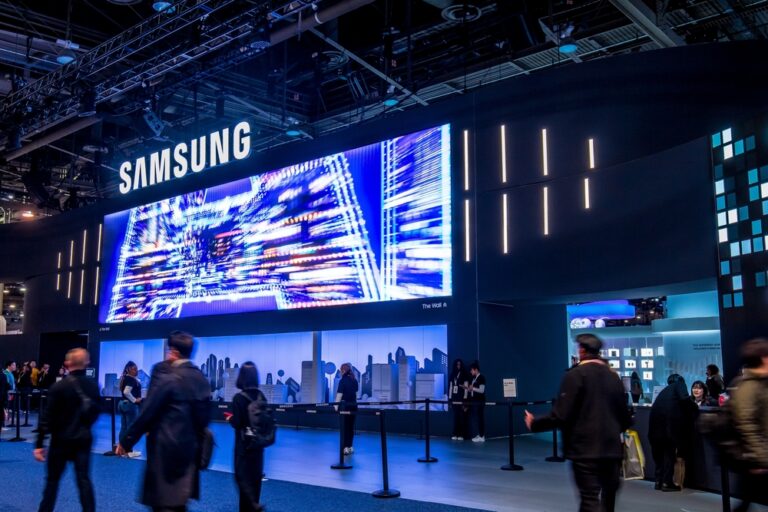
Choosing between digital signage and static signage isn’t just a design decision—it’s an operational, financial, and strategic one. For many organizations, signage plays a direct role in how customers move through a space, how information is absorbed, and how a brand is perceived in real time.
This guide breaks down digital signage vs static signage in clear, practical terms. Rather than oversimplifying the comparison, we’ll examine how each option performs in real-world environments, where each one makes sense, and how an experienced A/V company helps businesses make the right long-term choice.
Understanding the Two Signage Types
Before comparing them head-to-head, it’s important to define what we actually mean by digital and static signage—because the differences go far beyond “screens versus posters.”
What Is Digital Signage?
Digital signage uses commercial-grade displays—such as LCD panels, LED screens, or video walls—to present dynamic content. That content can change by time of day, location, audience, or business need. Updates are managed through software and delivered remotely across one or many displays.
Digital signage is often integrated with other A/V systems, including:
- Video walls
- Background audio systems
- Public address systems
- Conference room A/V
- Control systems and automation
What Is Static Signage?
Static signage includes printed or permanently mounted visuals such as posters, banners, wall graphics, menu boards, and directional signs. Once installed, the content remains fixed until it is physically replaced.
Static signage has been a staple of commercial spaces for decades and continues to serve a purpose in specific scenarios.
Digital Signage vs Static Signage: Core Differences
At a high level, the difference is flexibility versus permanence—but the real contrast becomes clearer when you look at how each performs across key business priorities.
Content Flexibility
Digital Signage
- Content updates instantly
- Supports video, motion, live data, and animations
- Scheduling allows different messages at different times
- Ideal for promotions, alerts, and time-sensitive messaging
Static Signage
- Content is fixed
- Updates require reprinting and reinstallation
- Best for long-term messaging that rarely changes
If your messaging evolves frequently, digital signage quickly becomes the more efficient option.
Visual Impact and Engagement
Static signage relies entirely on design quality and placement to capture attention. Digital signage adds motion, brightness control, and visual sequencing—elements that naturally draw the eye in busy environments.
In retail, hospitality, and corporate spaces, digital displays consistently outperform static signs in:
- Attention capture
- Message recall
- Dwell time
This is why many A/V companies recommend digital signage for customer-facing environments where engagement matters.
Cost Over Time
This is where many businesses initially hesitate—and where long-term thinking matters most.
Static Signage Costs
- Lower upfront investment
- Ongoing costs for printing, shipping, and labor
- Frequent updates increase long-term expenses
Digital Signage Costs
- Higher initial investment
- Minimal ongoing update costs
- Scales efficiently across multiple locations
Over a multi-year period, digital signage often delivers a lower total cost of ownership—especially for businesses that update content regularly.
Operational Efficiency and Control
Digital signage is not just a display—it’s a system.
With a centralized platform, businesses can:
- Update messaging across all locations simultaneously
- Schedule content weeks or months in advance
- Maintain brand consistency across regions
- Reduce manual labor and operational friction
Static signage, by contrast, requires physical coordination every time something changes.
Environmental Considerations
While static signage feels simple, frequent printing introduces waste—paper, ink, packaging, and transportation.
Digital signage reduces recurring material use and supports sustainability goals, especially when replacing high-turnover printed materials such as menus, promotional posters, and seasonal signage.
Where Static Signage Still Makes Sense
Despite the advantages of digital signage, static signage is not obsolete. In fact, a well-designed environment often uses both.
Static signage works best for:
- Permanent wayfinding
- Safety and compliance notices
- Architectural branding elements
- Areas without power or network access
- Messaging that rarely changes
An experienced A/V company will often recommend a hybrid approach, using static signage where permanence is beneficial and digital signage where flexibility is critical.
Industry-Specific Considerations
Retail and Showrooms
Digital signage excels at promotions, product highlights, and brand storytelling. Static signage supports pricing, policies, and architectural branding.
Restaurants and Hospitality
Digital menu boards reduce reprint costs and allow real-time updates. Static signage works well for décor-driven branding elements.
Corporate and Commercial Spaces
Digital signage supports internal communications, visitor messaging, and dashboards. Static signage reinforces brand identity and navigation.
Healthcare and Education
Digital signage enables alerts, schedules, and wayfinding updates. Static signage ensures compliance and consistency in regulated areas.
The Role of an A/V Company in Signage Decisions
The biggest mistake businesses make is treating signage as a standalone purchase rather than part of a broader A/V strategy.
A professional A/V company evaluates:
- Viewing distance and lighting conditions
- Content goals and update frequency
- Network and infrastructure requirements
- Integration with audio, control, and video systems
- Long-term scalability and support
Signage decisions often connect directly to other services, such as:
- LED video walls
- Background audio and paging systems
- Conference room A/V
- Unified communications
- Control and automation platforms
This holistic approach ensures signage supports the space rather than competing with it.
Digital Signage vs Static Signage: Side-by-Side Comparison
| Feature | Digital Signage | Static Signage |
| Content Updates | Instant, remote | Manual |
| Visual Impact | High | Moderate |
| Scheduling | Yes | No |
| Long-Term Cost | Lower | Higher |
| Scalability | Excellent | Limited |
| Integration with A/V Systems | Yes | No |
Choosing the Right Solution
The right choice depends on how your business communicates—not just how it looks.
Digital signage is the stronger option when:
- Messaging changes frequently
- Engagement and visibility matter
- Multiple locations need consistency
- Integration with other A/V systems is required
Static signage remains valuable when:
- Messaging is permanent
- Simplicity is preferred
- Power or connectivity is limited
In most modern environments, the best results come from using both strategically.
Frequently Asked Questions: Digital Signage vs Static Signage
Is digital signage better than static signage?
Digital signage is more flexible and engaging, but static signage still plays an important role. The best solution depends on content needs and environment.
Is digital signage more expensive?
Digital signage has a higher upfront cost but often costs less over time due to reduced printing and labor expenses.
Can digital and static signage be used together?
Yes. Many A/V companies design hybrid signage strategies that combine the strengths of both.
Does digital signage require constant maintenance?
Commercial systems are designed for reliability. With professional installation and support, maintenance is minimal.
Which businesses benefit most from digital signage?
Retail, hospitality, healthcare, education, and corporate environments see the strongest returns due to frequent messaging updates and the need for audience engagement.
Final Perspective
The debate around digital signage vs static signage isn’t about replacing one with the other—it’s about using each where it performs best. When signage decisions are guided by real operational needs and supported by a knowledgeable A/V company, the result is clearer communication, stronger branding, and a more efficient use of resources.
For businesses planning future growth, digital signage is often the foundation that allows messaging to evolve without friction—while static signage provides the structure that anchors the space.
Ready to add digital signs or want to learn more about what it would take to get digital signs installed? Be sure to reach out and ask about our digital signage services. Call us at 720-575-2494 or use our secure online form. You can also check all the other A/V projects we’ve helped our clients with – just click here.