In today’s A/V landscape, visual impact is no longer a “nice to have.” It’s a requirement. From corporate headquarters and control rooms to higher education, hospitality, and large-scale venues, organizations are looking for display technology that delivers clarity, scale, reliability, and long-term value. That’s where dvLED video walls come in.
If you’ve heard the term but want a clear, practical explanation—without buzzwords or vague marketing claims—this guide breaks it down from an A/V professional’s perspective.
What Is a dvLED Video Wall?
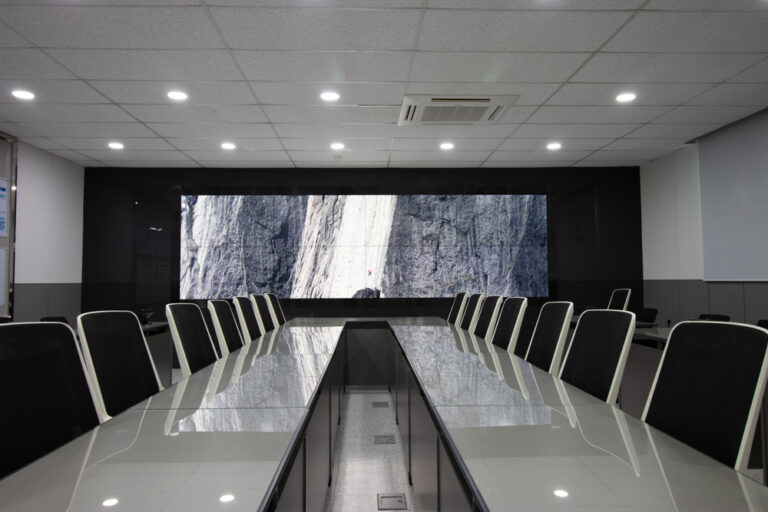
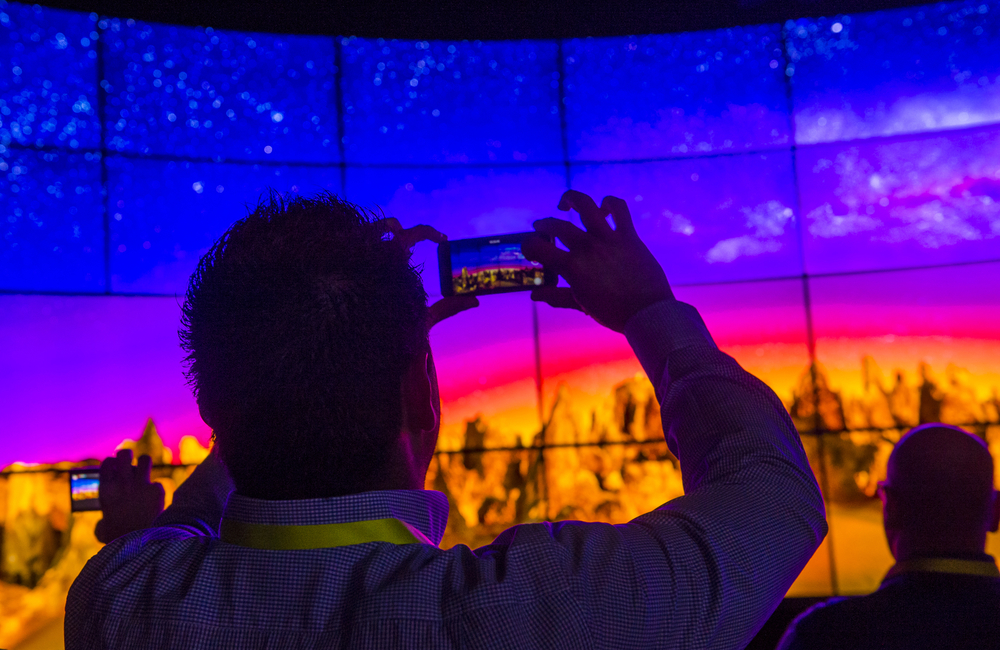
A dvLED video wall (direct-view LED video wall) is a large-format display made up of modular LED panels that emit light directly from individual pixels. Unlike LCD video walls or projection systems, dvLED displays do not rely on backlights or external light sources. Each LED pixel produces its own light, resulting in exceptional brightness, contrast, and color accuracy.
The “direct-view” distinction is important. It means viewers see the image straight from the LED surface itself—no projection lenses, no bezels between screens, and no visual interruptions across the display.
For A/V integrators and end users alike, dvLED video walls represent a shift away from traditional multi-screen displays toward seamless, scalable visual canvases.
How dvLED Video Walls Work
At a technical level, dvLED video walls are built from LED cabinets or modules, each containing thousands (or millions) of microscopic light-emitting diodes. These modules connect together physically and electronically to form a single, unified display.
Core Components of a dvLED System
- LED modules or cabinets – The physical building blocks of the wall
- Pixel pitch – The distance between individual LEDs, measured in millimeters
- Receiving cards and controllers – Manage image processing and content delivery
- Mounting structure – Precision frames or wall mounts to ensure alignment
- Power and signal distribution – Redundant systems for reliability
The result is a display that behaves like one massive screen, regardless of size or aspect ratio.
dvLED vs LCD Video Walls: What’s the Difference?
Many organizations start their search comparing dvLED to traditional LCD video walls. While both have their place, the differences are significant.
dvLED Video Walls
- Seamless image with no bezels
- Higher brightness, even in well-lit spaces
- Better viewing angles
- Longer lifespan with fewer points of failure
- Flexible sizing and custom shapes
LCD Video Walls
- Visible bezels between panels
- Limited brightness in high-ambient-light environments
- More constrained aspect ratios
- Lower upfront cost, but higher long-term maintenance
For mission-critical environments or high-visibility spaces, dvLED often delivers a better total cost of ownership over time.
Understanding Pixel Pitch (And Why It Matters)
Pixel pitch is one of the most important specifications when designing a dvLED video wall. It determines how close viewers can stand to the display without seeing individual pixels.
- Fine pixel pitch (0.9mm–1.5mm): Ideal for conference rooms, boardrooms, and control rooms
- Mid-range pixel pitch (1.8mm–2.5mm): Great for lobbies, command centers, and training spaces
- Larger pixel pitch (3mm+): Best for large venues, auditoriums, and outdoor viewing distances
An experienced A/V company will help match pixel pitch to room size, viewing distance, and content type—avoiding overengineering or unnecessary cost.
Where dvLED Video Walls Are Commonly Used
One of dvLED’s biggest advantages is versatility. These systems scale across industries and use cases.
Corporate & Commercial Spaces
- Executive boardrooms
- Experience centers and innovation labs
- Lobby feature walls
- Digital branding environments
Control Rooms & Operations Centers
- Public safety dispatch
- Utilities and transportation
- Network operations centers (NOCs)
- Security monitoring rooms
Education & Healthcare
- University command centers
- Medical simulation labs
- Training and collaboration spaces
Entertainment & Public Venues
- Broadcast studios
- Sports facilities
- Houses of worship
- Museums and attractions
Each environment places different demands on brightness, redundancy, and integration—which is why professional system design matters.
Benefits of dvLED Video Walls for Modern A/V Systems
From an A/V integration standpoint, dvLED video walls offer advantages that go far beyond aesthetics.
Visual Performance
- True blacks and high contrast ratios
- Consistent color across the entire display
- Smooth motion for video and real-time data
Design Flexibility
- Custom sizes and aspect ratios
- Curved, wrapped, or architectural installations
- Wall-to-wall or floor-to-ceiling designs
Reliability & Longevity
- Designed for 24/7 operation
- Fewer failure points than tiled LCD systems
- Long operational lifespan with proper calibration
Installation Considerations That Matter
A dvLED video wall is not a plug-and-play display. Precision matters at every stage.
Key factors include:
- Structural wall support and load calculations
- Exact mounting tolerances (often within fractions of a millimeter)
- Power redundancy and thermal management
- Front or rear serviceability access
- Integration with existing A/V control systems
This is where a full-service A/V company adds value—handling engineering, installation, calibration, and long-term support as a single solution.
Integrating dvLED Video Walls with Other A/V Services
Most dvLED projects are part of a larger ecosystem, not standalone installs. A well-designed system often integrates with:
- Video conferencing systems for executive collaboration
- Control systems for centralized management
- Digital signage platforms for dynamic content scheduling
- Audio systems for immersive presentations
- Structured cabling and network infrastructure to support data-heavy visuals
When all components are designed together, the result is a seamless, future-ready A/V environment.
Is a dvLED Video Wall Worth the Investment?
dvLED video walls typically require a higher upfront investment than LCD alternatives, but cost should be evaluated over the full lifecycle.
Factors that influence value:
- Reduced maintenance and replacement costs
- Energy efficiency improvements over time
- Enhanced brand perception and user experience
- Scalability for future expansion
For organizations that rely on visual communication, dvLED often proves to be the most strategic long-term choice.
Choosing the Right A/V Partner for dvLED Projects
The technology itself is only part of the equation. Successful dvLED deployments depend on expertise in:
- System design and engineering
- Manufacturer selection and calibration standards
- Installation precision
- Ongoing service and support
An experienced A/V company ensures the display performs as intended—not just on day one, but for years to come.
Frequently Asked Questions About dvLED Video Walls
What does dvLED stand for?
dvLED stands for direct-view light-emitting diode, referring to displays where each pixel emits its own light without a backlight.
How long does a dvLED video wall last?
Most dvLED systems are rated for 100,000 hours or more, depending on usage, brightness settings, and environmental conditions.
Can dvLED video walls be used in small rooms?
Yes. With fine pixel pitch options, dvLED video walls are increasingly common in conference rooms and collaboration spaces.
Are dvLED video walls better than projectors?
In most professional environments, yes. dvLED offers higher brightness, better contrast, no shadowing, and consistent performance in ambient light.
Can dvLED video walls display multiple sources at once?
Absolutely. With the right processing and control systems, dvLED walls can show multiple content sources simultaneously.
Do dvLED video walls require special maintenance?
They require less maintenance than LCD walls, but periodic calibration and professional servicing are still necessary to ensure optimal performance.
Final Thoughts
A dvLED video wall is more than a display—it’s a strategic communication tool. When properly designed and integrated, it elevates how organizations present information, collaborate, and engage audiences.
For businesses, institutions, and venues looking to future-proof their A/V investments, dvLED video walls are among the most powerful visual technologies available today—especially when deployed by an experienced A/V company that understands both the technology and the environment it serves.
Are you ready to add a dvLED video wall for your business, university, or facility? Reach out today to learn how we can help improve audio. Call us at 720-575-2494 or use our secure online form. You can also check all the other A/V projects we’ve helped our clients with – just click here.